
interview
How Virtual Stages Are Shaping the Future of Theater
 © Mistervlad
The Vienna State Opera on Digital Planning, Virtual Stage Worlds, and the Future of Opera Production.
The world's great opera houses rank among the most culturally significant and historic venues. Yet behind the scenes, the way productions are planned, prepared, and brought to the stage is undergoing a profound transformation.
Virtual stage environments, digital planning, and modern visualization technologies are initiating new possibilities for complex productions, international collaboration, and more efficient rehearsal processes. The goal is not to replace tradition – but to create more space for creativity and the true magic of the stage.
A key factor in this transformation is the impeccable integration of control systems from Waagner-Biro Stage Systems and the visualization solutions from Zacview. This has resulted in a solution that seamlessly connects virtual planning with real-world stage operation, opening new possibilities for preparing complex productions.
Together with UIfried Grabner, Technical Director of the Vienna State Opera, as well as Robert Eisenstein from the lighting department and Eva Swoboda from the technical direction team at the Vienna State Opera, we discussed how digital planning is already transforming day-to-day theater operations, the opportunities it creates for interdisciplinary collaboration, and why virtual planning is likely to become an integral part of modern theater productions in the years ahead.
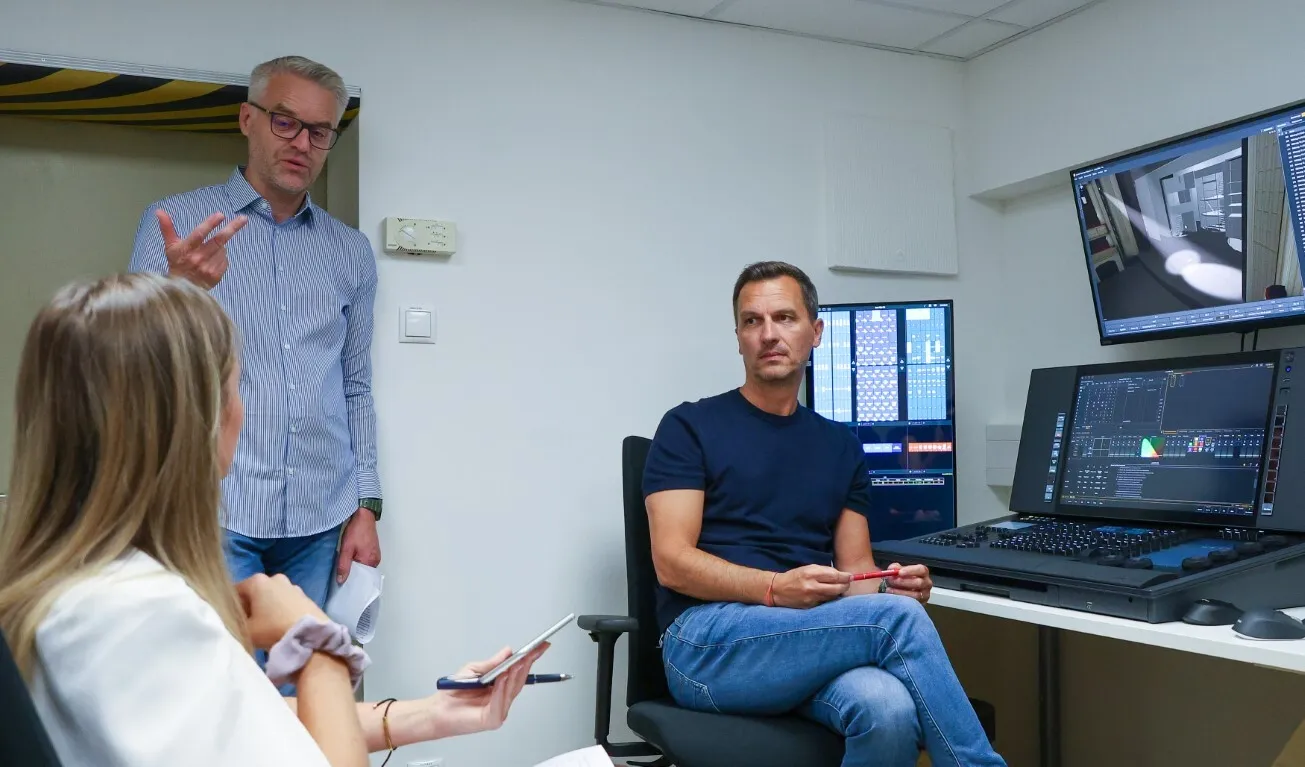
Picture: Ulfried Grabner (standing), Robert Eisenstein (seated)
Mr. Grabner, when people think of opera they often associate it with artistic excellence, powerful emotions, and spectacular productions. To what extent is technology already changing the work behind the scenes today?
Ulfried Grabner: The magic of opera still happens on stage. What has changed most is the preparation. With virtual planning tools, we can simulate and optimize complex set changes, technical workflows, and sightlines long before the first rehearsal begins.
As a result, rehearsals on the rehearsal stage allow us to move to the main stage much better prepared, freeing up valuable time for artistic work.
Great theatres thrive on tradition – but also on each generation bringing new ideas and ways to working. Do you see a shift in how productions are planned and prepared today?
Ulfried Grabner: Definitely. Productions are becoming increasingly complex, and at the same time, there is less and less rehearsal time available. Virtual planning helps us overcome these challenges.
Many processes that used to take place exclusively during technical rehearsals on stage can now be prepared in advance. This creates new opportunities for creative work.
Mr. Eisenstein, what exactly is a “virtual theater”?
Robert Eisenstein: Essentially, it creates a virtual replica of our stage. Set designs, lighting, and technical workflows can be simulated and tested well in advance of the first rehearsal.
What makes this particularly valuable is that we work with the same control consoles that will later be used on the actual stage. For us, the way we work largely the same. The only difference is that, initially we are looking at a monitor rather than directly at the stage.
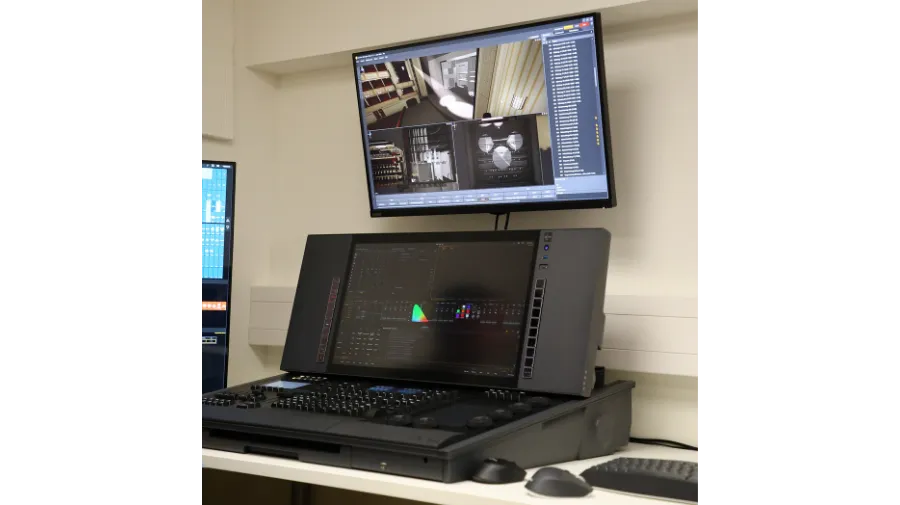
Virtual representation of the stage (screen)
Ms. Swoboda, how are these virtual stage worlds created?
Eva Swoboda: The foundation is made up of the 3D models and technical drawings for each production. Some of these come directly from the set designers, while others are created from technical construction data and adapted for visualization.
In doing so, we deliberately focus on the elements that are crucial for movement, sightlines, and technical workflows.
What advantages does this approach offer during the early stages of production planning and preparation?
Robert Eisenstein: The advantages begin long before the first set is built. We can check sightlines, test set changes, and identify technical challenges very early in the project.
This allows us to avoid changes later and provides much greater planning certainty for everyone involved.
Ulfried Grabner adds: We’ve already had projects where team members were based in different parts of the world yet were still able to collaborate on a production. Decisions that would previously have required travel and lengthy coordination processes can now be made jointly in just a few minutes.
How much does this affect the actual rehearsal process?
Robert Eisenstein: Especially with complex productions, the time savings are enormous. Movement sequences, scene transformations , and technical operations can be programmed and tested months before the premiere.
Many changes that used to be made under time pressure during stage rehearsals are now implemented in advance. This gives us valuable stage time – and stage time is one of the most precious resources in any opera house.
Eva Swoboda: Virtual planning also provides greater safety. We can test processes safely without putting people, scenery, or equipment at risk. Potential issues are identified early and resolved before they can affect the stage production.
Does digital planning ultimately lead to greater efficiency, or does it also create more room for creativity?
Robert Eisenstein: Both. The less time we spend on technical fundamentals, the more time we have for actual art.
We can focus more on light moods, atmosphere, and creative details. Technology doesn’t replace creativity – it creates the conditions that allow creativity to flourish even more.
Does this also change the way the technical, production, and creative teams collaborate?
Eva Swoboda: Absolutely. Everyone involved works from the same visual reference point . making coordination easier and enabling faster decision-making.
This is a major advantage, especially for international productions or teams working from different locations.
Robert Eisenstein: It also makes it much easier to train new colleagues. The system allows them to practice and familiarize themselves with workflows in a safe environment before they are carried out on stage.
Why have these technologies not yet been adopted more widely by theatres?
Ulfried Grabner: New technologies often encounter some initial hesitation. Many people automatically perceive them as highly complex and difficult to learn.
Our experience, however, is different: The actual visualization is surprisingly intuitive and easy to use. The virtual environment helps simplify workflows while improving safety.
How do you envision the future of opera production?
Ulfried Grabner: I am convinced that virtual planning will play an increasingly important role in the future. Production demands are increasing, while timelines continue to shrink.
Robert Eisenstein: And we are still in the early stages of this transformation. Looking ahead, technologies such as virtual reality and immersive planning environments have the potential to further redefine industry workflows
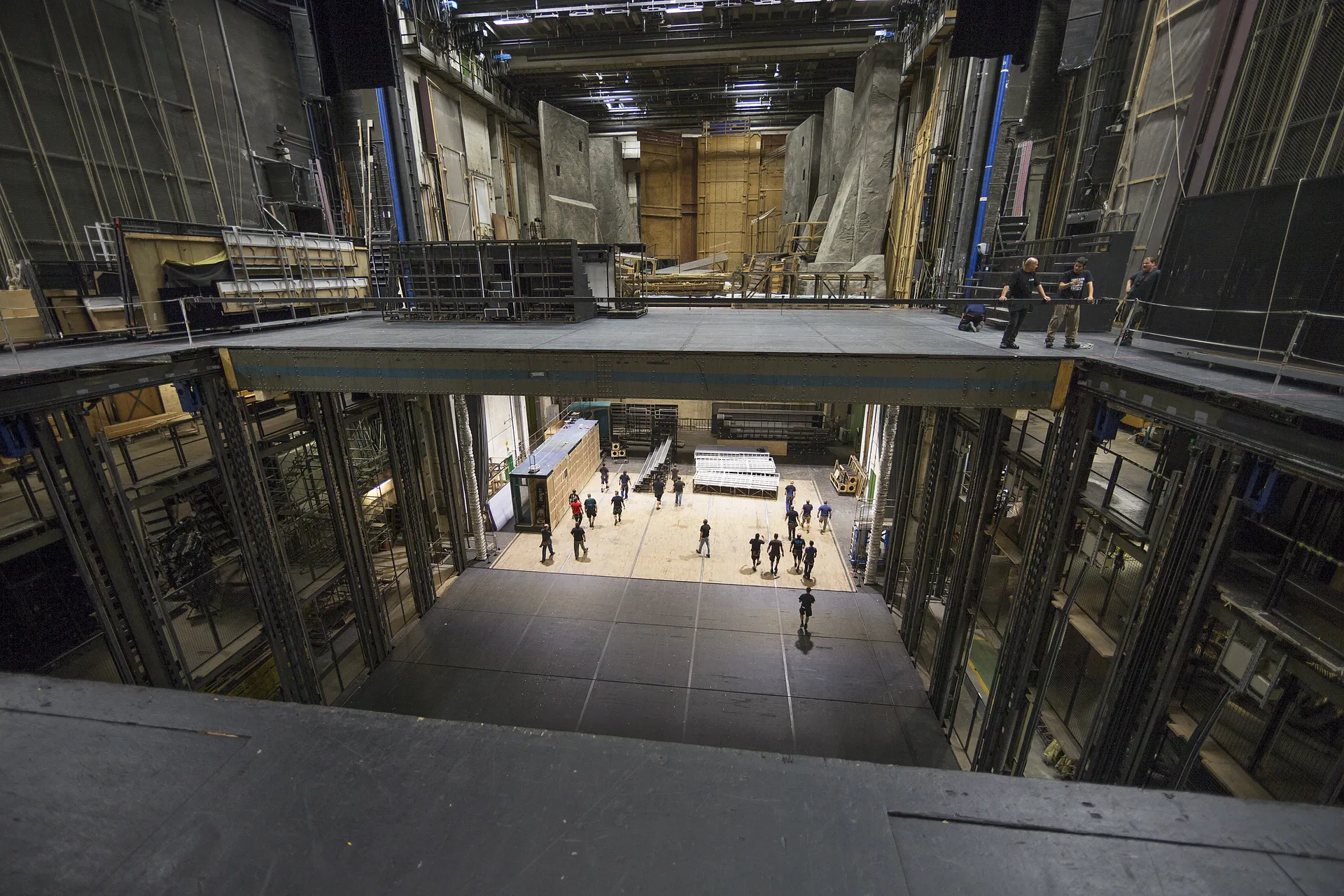
Stage Machinery of the Vienna State Opera
What role does sustainability play in virtual planning?
Ulfried Grabner: Virtual planning not only reduces time and costs but also contributes to a more sustainable way of working. International coordination can take place virtually, which reduces travel and allows decisions to be made more swiftly.
Eva Swoboda: There are also advantages in set construction. When technical workflows and requirements become clear early on, resources can be allocated more effectively, and unnecessary adjustments can be avoided.
Robert Eisenstein: Ultimately, it’s about building only what is needed and using the available time on stage as efficiently as possible.
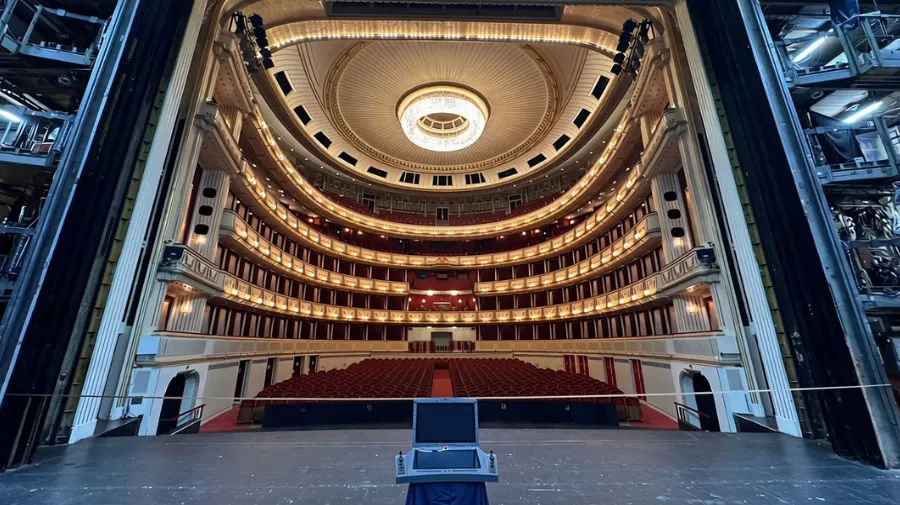
C·A·T V5 control system with a view of the auditorium
Regardless of all the technology, what do you think is the special magic of opera?
Robert Eisenstein: For me, it’s the journey from the initial idea to the premiere. Step by step, a creative vision evolves into a full production, bringing together set design, lighting, technology, and music to create a unique experience for the audience.
Eva Swoboda: I’m always fascinated by the journey from an initial idea to a production that ultimately comes to life on stage. Often, at the outset, it is hard to imagine how everything will come together, yet in in the end it all works out.
Ulfried Grabner: And that’s exactly what theater is all about: bringing people from a wide range of disciplines together to create a production. Artists, technicians, stagecrafts professionals, and administrative staff all share the same goal. This diversity is what makes working in theater so unique.
One last question: Does the use of digital tools change the traditional nature of opera?
Robert Eisenstein: No. Tradition lives on stage. Audiences continue to experience the same magic, the same emotions, and the same artistry.
Eva Swoboda: Virtual planning doesn’t change the audience experience. Instead, it helps us bring that experience to life more effectively.
Ulfried Grabner: If anything, these technologies create more room for quality, creativity, and a smoother rehearsal process, which ultimately benefits what matters most: performance on stage.
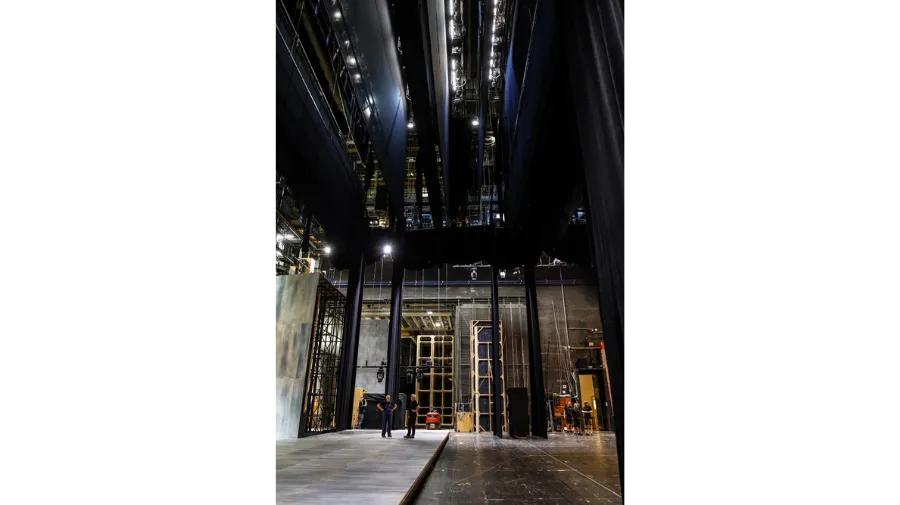
Side view of the stage area
“Virtual theater doesn’t replace the magic of the stage. It creates more room for the magic to unfold.”
Perhaps the most important insight is this: the future of the stage lies not in replacing tradition, but in thoughtfully combining decades of experience with new technological possibilities.
 © Waagner-Biro Stage Systems
Melanie Wograndl
Author
 ©Waagner-Biro Stage Systems
Victoria Knitschke
Author
11/5/2026
In this article
Waagner Biro Stage